How Much Do Original Paintings Cost in India?
An original in India can cost a couple of thousand rupees or several crores, and both prices can be fair. A small ink drawing by someone two years out of college sits at one end. A canvas by a famous modern master, sold at auction, sits at the other. Most people who want something for the living room are shopping in the wide stretch between, where the price depends on a handful of things you can check.
Rough bands, with a warning
Treat these as a way to set expectations. They are loose, and plenty of good work falls outside them.
| Kind of work | Where prices often begin |
|---|---|
| Small drawing or watercolour, early-career artist | Low thousands of rupees |
| Medium canvas, early-career artist | Upper thousands to tens of thousands |
| Large canvas, artist with several exhibitions | Tens of thousands to a lakh or more |
| Well-known artist with gallery representation | Lakhs |
| Modern masters, mostly through auction houses | Tens of lakhs to crores |
Nobody publishes a rate card for the whole country. The best evidence is always the same artist's other work.
The sum many artists use
A lot of painters price by area so that their work stays consistent. They multiply height by width and then by a personal rate, and add the cost of materials.
Suppose an artist's rate is ₹20 per square inch. That number is made up for the arithmetic.
- A 12 x 16 inch work is 192 square inches, so ₹3,840 plus materials
- A 24 x 36 inch work is 864 square inches, so ₹17,280 plus materials
Area pricing makes big works climb fast. Some artists prefer to add height and width instead, which are called united inches. The 12 x 16 becomes 28 and the 24 x 36 becomes 60. With that method the big painting costs a little over twice the small one, where by area it was four and a half times.
You can turn this round. Take the asking price, divide by the area, and do it for three works by the same person. If two come out at ₹25 a square inch and the third at ₹70, there will be a reason, and it is fine to ask what it is. It may be the one that took four months.
What pushes a price up
Experience and record. Exhibitions, awards, sales and years of steady work all count. An artist who has raised prices slowly over a decade is easier to trust than one whose prices doubled last month.
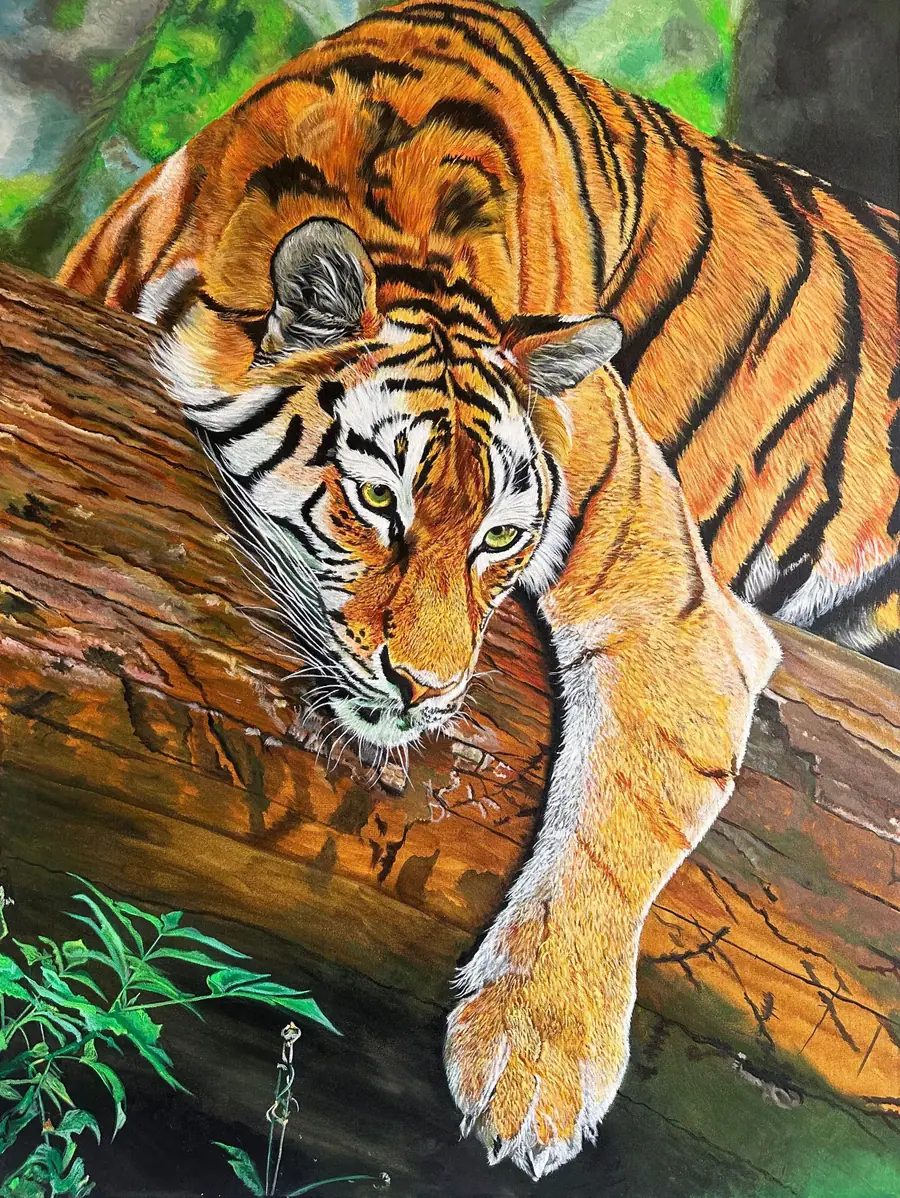
Time in the piece. Two paintings of the same size can hold very different amounts of labour. A hyper-realistic tiger with every whisker painted might take two hundred hours. A loose abstract could take six, with several abandoned versions behind it.
Medium. Oil takes longer to dry and good pigments cost more. Works on paper usually cost less than canvas of the same size, partly because you still have to frame them.
Subject. In a portrait, each extra figure adds work. So do hands, jewellery and patterned cloth.
Costs that arrive later
The painting is one line in the budget. Framing a work on paper with acid-free mount and decent glazing can cost as much as a small drawing. Packing and courier for a large stretched canvas, especially across the country, can be a real sum too. Add fixings, and a picture light if the wall is dark.
A useful habit is to keep back a fifth to a quarter of what you planned to spend for these. If you need nothing more than a hook, you have the start of your next purchase.
Business buyers should ask about a tax invoice early. GST treatment depends on the seller and the sale, so check it with your accountant.
Is it all right to negotiate?
Yes, politely and once. Ask whether the price has any room, or whether delivery could be included. Buying two works together is the strongest reason to ask. Opening at half the listed price tends to end the conversation, because the artist has already done the sum above and knows what their hours are worth.
On Wallhance the artists set their own prices and no commission is added or taken out, so there is no gallery margin in the figure for either of you to argue over.
Getting more for a fixed budget
Go smaller by an artist you admire before you go bigger by one you feel lukewarm about. Look at drawings and works on paper, where the same hand often costs far less. Look at studies made for larger paintings. And read original or print if the choice is between a small original and a big reproduction at the same price.
New painters are the other route. Read the artists' pages, and write to the ones whose work you would recognise without a signature.
Common questions
How much does an original painting cost in India? Small drawings and watercolours by early-career artists often begin in the low thousands of rupees. Medium canvases run from the upper thousands to tens of thousands, and large canvases by artists with several exhibitions from tens of thousands to a lakh or more. These are loose bands, and the best evidence is the same artist's other work.
How do artists work out the price of a painting? Many multiply height by width and then by a personal rate, and add the cost of materials. Others add height and width instead, which makes large works climb less steeply.
What costs come on top of the price? Framing, packing, courier, fixings and sometimes a picture light. Keep back a fifth to a quarter of your budget for these.
Can I negotiate with the artist? Yes, politely and once. Asking about two works together is the strongest reason.