How to Light a Painting at Home
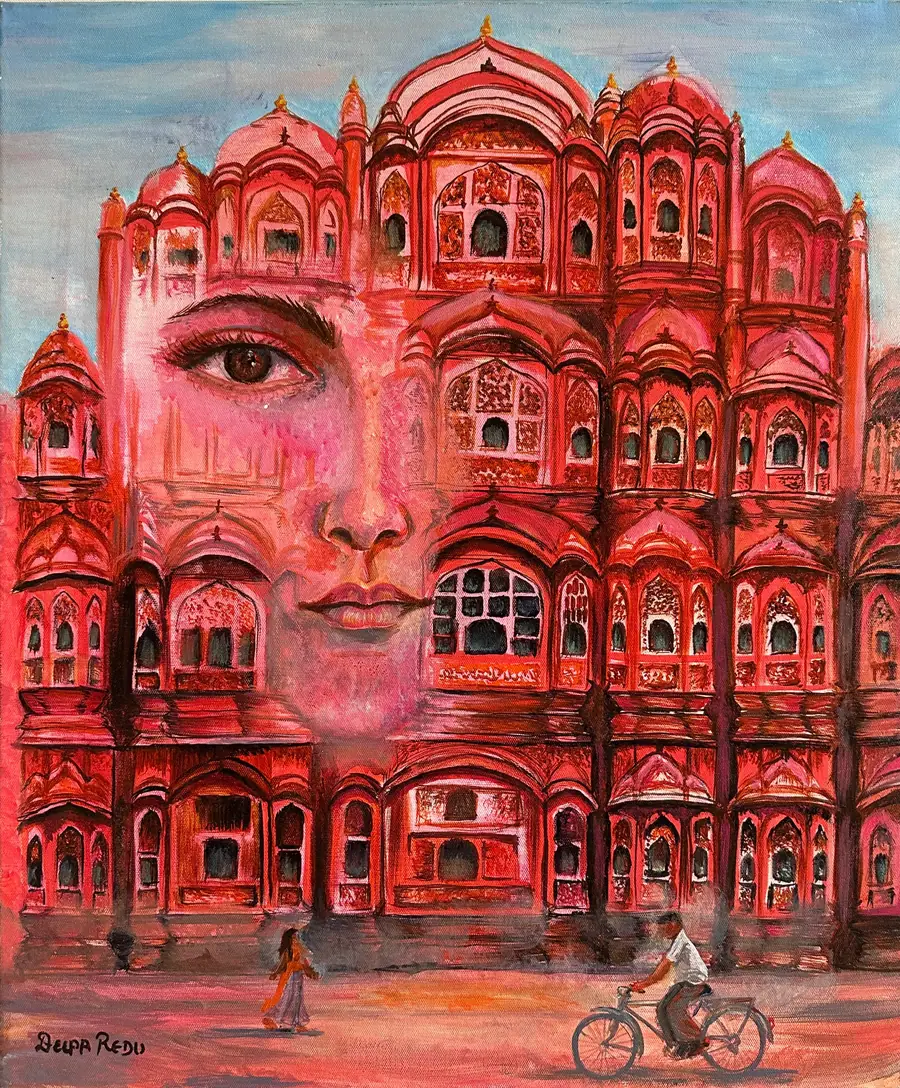
Aim the light at the painting from above at about 30 degrees from the vertical. Use a warm LED with a high colour rating. Those two decisions will get you most of the way, and the rest is fixing glare.
Why 30 degrees
Too steep, with the lamp close to the wall, and the frame throws a shadow across the top of the picture while every bump in the paint casts its own. Too shallow, with the lamp far out in the room, and the light bounces off the surface into your eyes, or your own shadow falls on the work when you step up to look.
Thirty degrees sits between. For a deep frame, let the angle open to about 35 so the moulding's shadow lifts. For glass or a glossy varnish, closing it to 25 usually moves the reflection below eye level.
Where the fitting goes
Take the ceiling height, subtract the height of the painting's centre, and multiply by 0.58. The answer is how far from the wall to place the light.
| Ceiling | Distance from wall, centre at 145 cm |
|---|---|
| 260 cm (8 feet 6 inches) | 67 cm (26 inches) |
| 275 cm (9 feet) | 75 cm (30 inches) |
| 305 cm (10 feet) | 93 cm (37 inches) |
| 335 cm (11 feet) | 110 cm (43 inches) |
If you have a false ceiling, measure to the false ceiling. Do this sum before the electrician cuts holes. Builders like to run downlights in a neat line 30 cm from the wall, and at that distance you get bright scallops on the paint above the picture and gloom on the picture itself. An adjustable fitting, one that tilts and turns, rescues a lot of bad positions.
Choosing the bulb
Three figures on the box matter.
- CRI tells you how faithfully colours show. Look for 90 or higher. Under cheap lamps at 80, reds and skin tones go dull.
- Colour temperature is given in kelvin. Choose 2700K to 3000K for homes. Cool white at 4000K can suit a black and white drawing, and 6500K makes everything look like a chemist's shop.
- Beam angle sets the width of the pool of light. A 24 to 36 degree beam suits medium paintings from a normal ceiling. Go narrower for a small work and wider for a large one.
Two lamps on a wide painting beat a single strong one. Use a dimmer if you can, and check that the bulb is marked dimmable, or it will flicker.
Picture lights
A picture light is the slim lamp on an arm, fixed to the wall above the frame or to the frame itself. Choose one about half to two thirds of the frame's width. It should sit far enough forward that the top of the painting is no brighter than the middle.
Wiring one needs a point in the right place, which means chasing plaster. Rechargeable versions avoid that. They are good enough for evenings with guests and tiresome as everyday lighting, as you will forget to charge them.
Glare on glass
Sit in your usual seat after dark with the lights on. If you can see a lamp, a window or yourself in the picture, try these in order.
- Switch off one light at a time to find the culprit.
- Tilt the top of the frame forward a little by moving the wire fixings lower on the back.
- Move the lamp closer to the wall.
- Reglaze with anti-reflective glass, which costs more and is worth it on a drawing you love.
Matt "non-reflective" glass is a different thing. Its etched surface softens fine lines, so avoid it over detailed graphite.
How much light is safe
Museums commonly keep watercolours, drawings and other sensitive works to around 50 lux, and oils and acrylics to around 200 lux. You don't need a meter to live by this, though phone apps give a rough idea. A watercolour lit brightly for two hours in the evening is fine. The same watercolour facing a west window all summer is not.
LEDs give off almost no ultraviolet, which helps. Fading from visible light still adds up, so switch the spot off when you leave the room. Works on paper want the dimmest wall you can bear, and caring for paintings has more on sun and heat.
Daylight
Indirect daylight is the best light there is for looking at colour. A wall at right angles to a window gets it without the sun landing on the paint. Watch one full day before hanging anything permanent, because the winter sun comes in much lower and reaches walls it never touches in May.
Dark backgrounds, common in wildlife painting, need more light than pale ones to read at the same strength. Plan for that when you plan the position, and get the hanging height fixed before the electrician arrives.