How to Photograph Your Paintings With a Phone
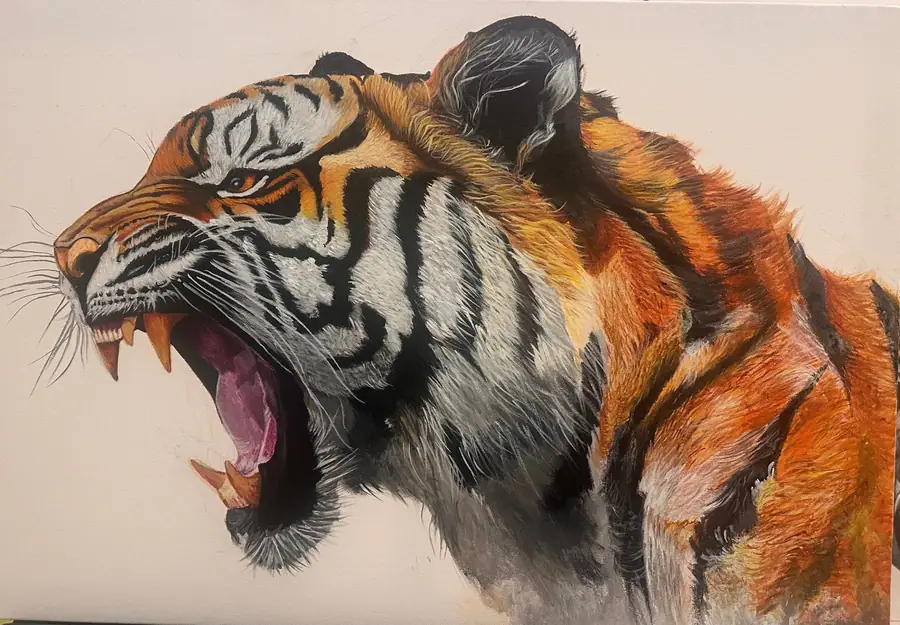
Turn off the flash, take the painting off the wall and carry it to a window. If you do only that, your pictures will be better than most of what is sent in for review.
Buyers online see your photograph before they see your painting, and for a long while it is all they see. A crooked or yellow image makes people distrust everything else on the page. Any recent phone is good enough if the light is right and you are patient.
Light comes first
The best source is a large window with no direct sun coming through it, or open shade outdoors. Around nine to eleven in the morning on a lightly overcast day is lovely. In bright weather, a verandah works.
Switch off every bulb in the room. Daylight and a warm LED together will give you a painting that is blue on one side and orange on the other, and no editing can fix that cleanly.
Place the work so that the light falls across it at an angle of about 45 degrees. If one side is darker, stand a white thermocol sheet or a bedsheet on that side to throw some light back.
Set it up
- Stand the painting upright against a chair or easel, or lay it flat on the floor for paper. Paper must be flat, so weigh the corners outside the image.
- Wipe the phone lens with a clean cloth. It is always greasier than you think.
- Hold the phone so the lens is level with the centre of the painting and parallel to it. Turn on the grid lines in the camera settings.
- Step back and use 2x zoom if your phone has a true 2x lens. Wide lenses used close up make the sides bow outward.
- Tap the middle of the painting to focus, then lock focus and exposure if your phone allows it.
- Rest the phone on a tripod or a pile of books, and use the timer so your finger does not shake it.
- Take ten. Change the exposure slightly between them.
Turn off portrait mode, beauty mode, HDR filters and any "AI scene" setting. They sharpen, smooth and saturate without asking you.
Glare
Varnish and glass reflect whatever is in front of them, which is usually you. Wear something dark. Move the painting a little at a time relative to the window until the shine slides off. If it will not go, turn the painting so the light comes from the side.
Always photograph before framing under glass. If it is framed already and you cannot take it out, hang a black cloth behind you with a gap for the lens.
Getting the colour true
Put a sheet of plain white paper next to the painting in one frame. In any editing app, use the white balance tool and tap on the paper. Copy the same correction to the other shots.
Next, hold the phone beside the actual painting in daylight and compare. Adjust only three things: white balance, exposure and, with a very light hand, contrast. Leave saturation where it is. A buyer who receives a duller painting than the picture promised will not forgive you, and is entitled not to.
Reds and deep blues are the usual problem, since phones push them. If they refuse to match, say so in your description.
Crop and size
Crop exactly to the edge of the painting, with no wall, no easel and no border. Use the perspective or skew tool to make the sides parallel. This matters a good deal on Wallhance because the visualizer hangs your image at the true size you enter. If some floor is showing, the floor gets hung too.
Keep the original at full resolution, and send that file. Images forwarded on WhatsApp are compressed badly unless sent as a document.
Measure the painting afterwards, unframed, height and width, with a steel tape. Compare the ratio with your crop. For a 60 by 90 cm work, the picture should be exactly one and a half times as long as it is wide.
The extra shots
One straight picture is the minimum. Add these:
- A close detail of the part you are proudest of, about the size of a palm.
- A raking light view if there is texture.
- The edge and the back, showing how it is stretched and signed.
- The work on a wall with something of known size next to it.
- Your signature, close.
Work on paper deserves one photo of the whole sheet with its margins, because a framer will want to know how much there is.
Before you send
Look at the final picture on a second phone. Ask someone who has seen the painting whether it looks right.
When the pictures are ready you can submit single works, or ask to join, through the page for artists. Every work is reviewed before it is hung. While you are gathering files, it is a good moment to settle your prices and write your artist statement.
Common questions
Can I photograph paintings with a phone? Yes. Any recent phone is good enough with daylight from a large window, every bulb off, the flash off, and the lens level with the centre of the painting and parallel to it.
How do I avoid glare? Wear something dark and move the painting a little at a time relative to the window until the shine slides off. Photograph before framing under glass.
How do I get the colours right? Photograph a sheet of plain white paper beside the painting, use the white balance tool on it, and copy the correction to the other shots. Leave saturation where it is.
Which photographs do buyers want? One straight picture of the whole work, a close detail, a side-lit view if there is texture, the edge and back, the work on a wall for scale, and your signature.