Oil or Acrylic: How to Tell Them Apart and Choose
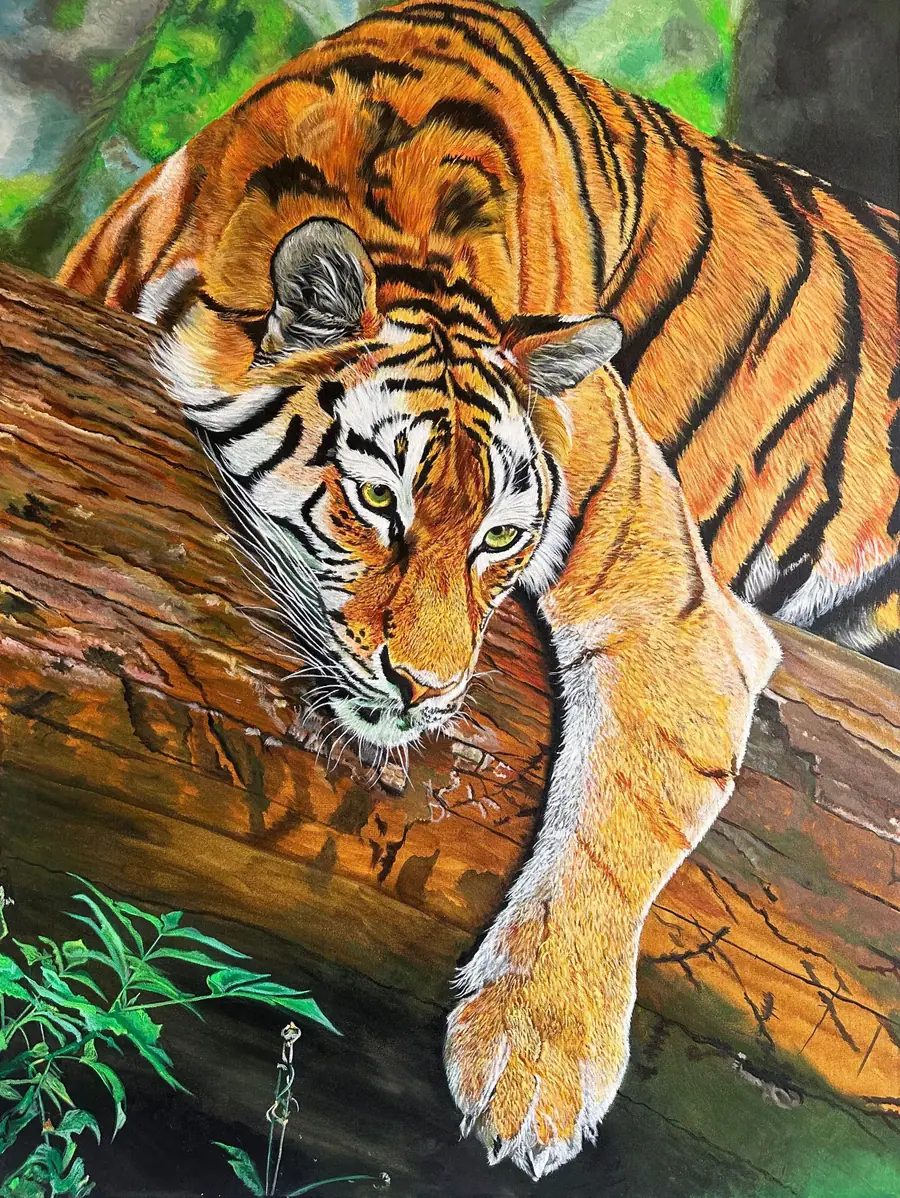
Put a fresh oil painting and a fresh acrylic side by side and a working painter will usually know which is which before reading the label. The clues are in the edges, the darks and sometimes the smell. None of them tells you which is the better painting, but the medium does decide how a work was made and how you should look after it.
What is actually in the paint
Both begin with pigment, and often with the very same pigment. Ultramarine in an oil tube and ultramarine in an acrylic tube are the same blue powder. The difference is what holds the powder together. Oil paint uses a drying oil, most often linseed. Acrylic uses a plastic resin suspended in water.
Oil does not dry the way wet clothes dry. It takes up oxygen from the air and slowly hardens into a film. Acrylic loses its water, the resin particles fuse, and the paint is set for good.
That one fact explains most of what you see. An oil painter can return to a cheek the next morning and still push the paint around. An acrylic painter has perhaps half an hour, less under a ceiling fan in May, and so tends to work in layers, crisp shapes or quick strokes.
Reading the surface
Look at the place where two colours meet. Long, soft transitions with no visible hatching, such as the turn of a jaw or an evening sky, are easier in oil. Hard edges, flat areas and masking tape lines are natural to acrylic.
Then look at the darks. Oil darks have depth and a slight wetness to them. Acrylic dries a shade darker than it goes on, and unvarnished it often has a flatter, more even sheen. A coat of varnish narrows the gap a great deal, so treat this as a hint.
The back of the canvas can help too. Oil sometimes leaves a faint yellowish stain at the edges and a smell of linseed or turpentine that hangs on for months. Acrylic has almost no smell once dry.
Side by side
| Oil | Acrylic | |
|---|---|---|
| Touch dry | A few days, longer if thick | Under an hour for thin layers |
| Usual wait before a traditional varnish | Six to twelve months | A week or two |
| Colour change over decades | Can yellow slightly, especially whites kept in the dark | Very little yellowing |
| Film | Becomes harder and more brittle with age | Stays flexible |
| Main risk | Cracking from poor layering | Holds dust, softens a little in heat |
Living with each one in India
Heat and damp matter more than most buyers expect. Acrylic film softens slightly in a hot room, and a soft surface holds dust. Never stack two unframed acrylics face to face in summer, or wrap one tightly in bubble wrap with the bubbles touching the paint. The pattern can print itself on the surface.
Oil brings a different worry. A canvas that moves as the monsoon comes and goes puts strain on a brittle old film. Keep it off outside walls that sweat, and leave a small air gap behind the stretcher. Our guide to looking after paintings covers dusting and damp in more detail.
An oil finished last month is not ready for its final varnish. Good painters will tell you so, and will offer either to varnish it later or to use a breathable varnish made for early application. Ask. It is a perfectly ordinary question.
Which should you buy
If you want a portrait with slow, blended flesh, look first at oils. If you love flat colour, sharp pattern or thick scraped texture, acrylic does all of that well, and it is ready to travel sooner after it is finished. For a child's room or a busy corridor I lean towards a varnished acrylic, since it is more forgiving of small knocks.
Price tells you little here. A well known artist's acrylic will cost more than a beginner's oil, and that is how it should be.
Some artists use both, with an acrylic underpainting and oil on top. That order is sound. The reverse, acrylic over oil, tends to peel, because water-based paint cannot grip an oily film. If a listing says both, ask which came first.
You can compare the two in the gallery, where works are listed with their medium, and then put your favourite on a photograph of your own wall in the visualizer. Screens flatten surface, so for anything you are serious about, ask the artist for a close photograph taken with light from one side.