Buying Wildlife Art: A Guide for First-Time Collectors
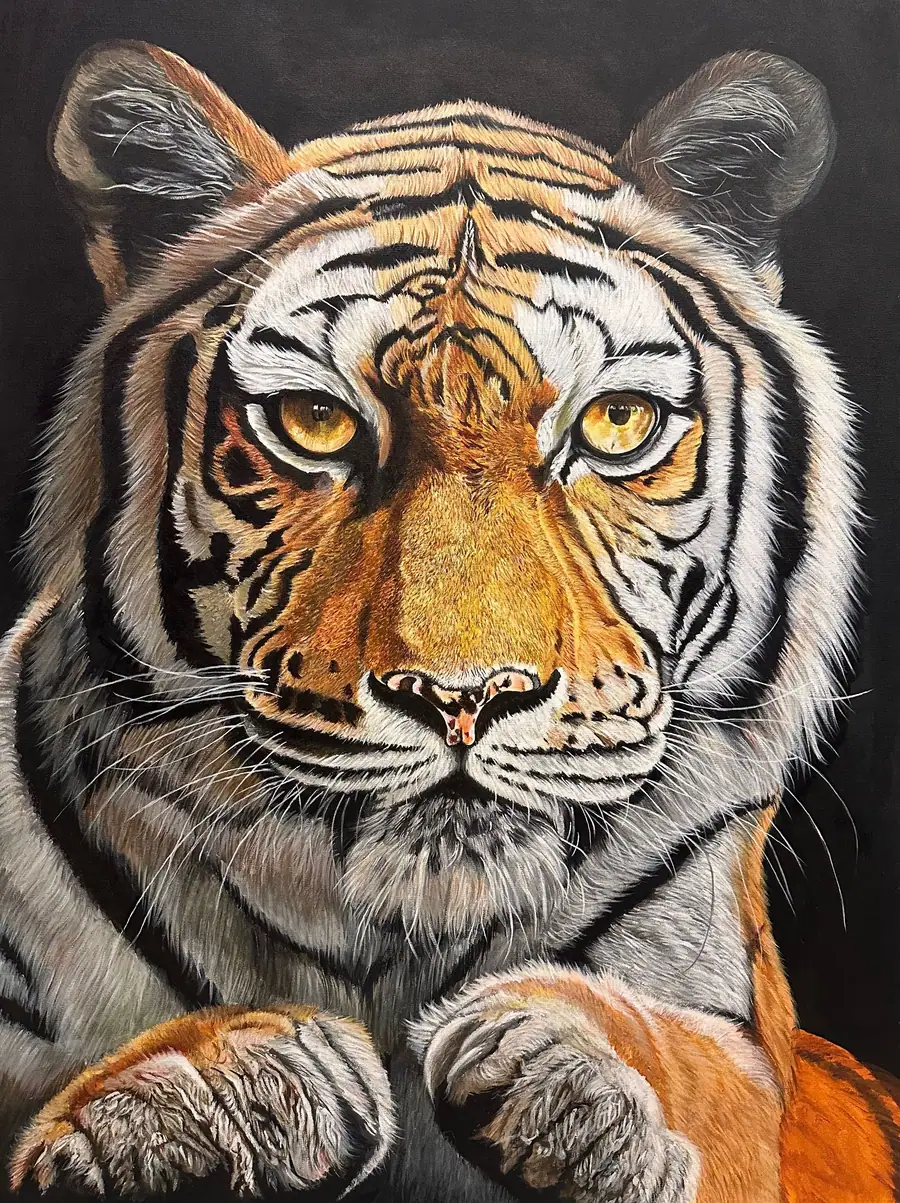
Wildlife is one of the easiest subjects to love and one of the hardest to paint well. These points help you see the difference.
Look at the eyes first
In a strong animal painting the eyes have depth: a highlight in the right place, a soft edge to the pupil, and a gaze with direction. Flat or evenly outlined eyes make the whole animal look like a stuffed toy.
Then the structure under the fur
Fur should follow the body. Look at the shoulders, jaw and brow: you should be able to feel bone and muscle beneath. Good artists group fur into areas of light and shade, and paint individual hairs only where they matter.
Realistic or expressive
Realistic works reward close viewing and suit rooms where you sit for a while. Expressive works, with bold colour or loose brushwork, read well from across a room. Neither is better. Choose the one you would still enjoy on an ordinary Tuesday.
Ask about the reference
A fair question for any wildlife artist is what they worked from. Field sketches, their own photographs and licensed references are all normal. Copying another photographer's image without permission is not.
Questions to ask before buying
- Is this the original, and are there prints of it?
- What are the paint and surface, and is it varnished?
- Is it signed, and does it come with a certificate of authenticity?
- Does the price include a frame and delivery?
- How should I clean and hang it?
Where it works at home
A direct stare is powerful and can be tiring opposite a bed. Try it in a living room, study or entrance. Resting animals and cubs are gentler and suit bedrooms. Dark backgrounds need good light, ideally a lamp angled from above.
Common questions
How do I judge a wildlife painting? Look at the eyes first: a highlight in the right place, a soft edge to the pupil and a gaze with direction. Then look for bone and muscle under the fur.
Where should I hang a tiger or leopard painting? A direct stare suits a living room, study or entrance and can be tiring opposite a bed. Resting animals and cubs are gentler and suit bedrooms.
Is it all right for an artist to work from photographs? Yes, from their own photographs, field sketches or licensed references. Copying another photographer's image without permission is not.